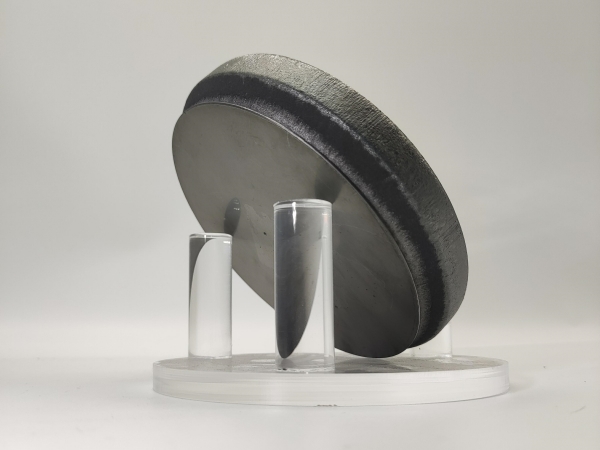
In the manufacturing of nitride-based semiconductor devices—such as LEDs, Mini-LEDs, Micro-LEDs, and power electronics—the choice of substrate plays a critical role in determining epitaxial quality and overall device performance. Among available substrate materials, sapphire substrates have become one of the most widely adopted solutions due to their excellent physical and chemical properties. Building upon this foundation, Patterned Sapphire Substrates (PSS) have further advanced the performance of high-efficiency optoelectronic devices.
This article provides a structured overview of sapphire substrates and PSS sapphire substrates, highlighting their key features, technical advantages, and application areas.

1. Sapphire Substrates
Sapphire substrates are typically fabricated from single-crystal aluminum oxide (Al₂O₃). Thanks to their high hardness, thermal stability, and chemical resistance,
sapphire substrates are well suited for high-temperature epitaxial growth processes. Among various crystal orientations, the
C-plane (0001) sapphire substrate is the most commonly used for GaN-based epitaxy.
Key Characteristics:Excellent surface flatness with mature polishing technology
High thermal stability and mechanical strength
Wide process window and high production yield
Relatively cost-effective for large-scale manufacturing
Typical Applications:Conventional LED epitaxial wafers
GaN and AlN epitaxial research and development
Power and RF semiconductor devices
Due to its mature supply chain and proven reliability, sapphire remains a foundational substrate material in the nitride semiconductor industry.
2. Patterned Sapphire Substrates (PSS)
Patterned Sapphire Substrates are produced by introducing periodic micro- or nano-scale patterns—such as cones, truncated cones, or pyramids—onto the surface of a standard sapphire wafer using photolithography and etching processes. These patterned structures play a crucial role in modifying dislocation propagation and light propagation behavior during and after epitaxial growth.
 Core Advantages:
Effective reduction of threading dislocation density in epitaxial layers
Improved stress distribution and reduced wafer cracking risk
Enhanced light extraction efficiency
Improved device brightness, uniformity, and reliability
Typical Applications:High-brightness LEDs (HB-LEDs)
Mini-LED and Micro-LED displays
Advanced optoelectronic devices with stringent performance requirements
PSS technology has become a key enabler for next-generation high-efficiency LED and display applications.
3. Comparison Between Sapphire Substrates and PSS Sapphire
| Category |
Sapphire Substrate |
PSS Sapphire |
| Surface morphology |
Polished, flat surface |
Patterned microstructures |
| Epitaxial defect density |
Relatively higher |
Significantly reduced |
| Light extraction efficiency |
Moderate |
Substantially improved |
| Manufacturing cost |
Lower |
Higher |
| Primary applications |
Standard & R&D use |
High-performance optoelectronic devices |
4. Conclusion
As optoelectronic and semiconductor technologies continue to evolve toward higher efficiency, brightness, and reliability, substrate engineering has become increasingly important.
Conventional sapphire substrates remain a cost-effective and reliable solution for many applications, while
PSS sapphire substrates offer clear performance advantages for high-end LED and display technologies through advanced surface structuring.
Selecting the appropriate substrate requires a comprehensive evaluation of application requirements, performance targets, and cost considerations. By aligning substrate technology with end-product goals, manufacturers can achieve an optimal balance between device performance and manufacturing efficiency.