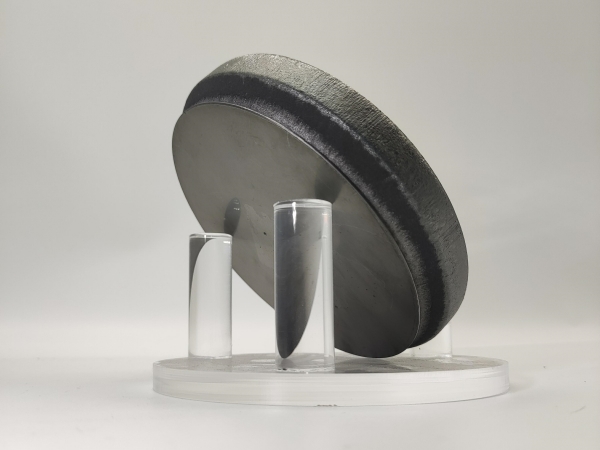
Quartz glass is a specialty glass material primarily composed of silicon dioxide (SiO₂). Owing to its high purity, broad spectral transmission, extremely low coefficient of thermal expansion, and excellent resistance to thermal shock, corrosion, and deep-UV radiation, quartz glass is widely used in optics, semiconductor manufacturing, aerospace, and other advanced industrial fields.
In industrial production, the performance of quartz glass is determined not only by the purity of the raw materials, but also—more critically—by the manufacturing process. Different processing routes lead to significant differences in impurity levels, hydroxyl content, optical uniformity, and achievable product dimensions. From the perspectives of raw material selection and fabrication methodology, six representative processing routes are commonly used to produce high-purity quartz glass.
1. Raw Material Systems: Where Quartz Glass Begins
Quartz glass production typically starts from one of two raw material systems:
High-purity quartz sand, used in melting-based processes where the material is directly fused at ultra-high temperatures.
Silicon-containing chemical precursors (such as SiCl₄), used in synthetic processes where silicon dioxide is formed through chemical reactions and subsequently consolidated into quartz glass.
The choice of raw material largely defines the feasible processing route and the resulting performance characteristics of the final product.
2. Electric Fusion: A Traditional Route for Fused Quartz
Electric fusion is one of the earliest industrialized methods for producing
quartz glass. In this process, powdered quartz sand is melted inside a crucible using electrical resistance heating, arc heating, or medium-frequency induction heating at temperatures exceeding 1800 °C. The molten material is then rapidly cooled to form amorphous quartz glass.
This method is well established and suitable for producing large-volume components with relatively low hydroxyl content. However, because the process depends heavily on the purity of the quartz sand, the resulting glass typically contains higher levels of metallic impurities, leading to limited ultraviolet transmission. As a result, electrically fused quartz is mainly used in industrial applications where extreme optical performance is not required.
3. Flame Fusion: Hydrogen–Oxygen Melting of Quartz
Flame fusion employs a hydrogen–oxygen flame to melt natural quartz material, which is deposited layer by layer onto a target surface to form
quartz glass. Compared with electric fusion, this process features simpler equipment, lower overall energy consumption, and improved control of bubble formation.
However, the presence of hydrogen and water vapor in the flame environment tends to introduce hydroxyl groups into the glass, resulting in relatively high OH content. In addition, dimensional accuracy and surface smoothness are more difficult to control. Flame-fused quartz glass is therefore commonly used in light sources, semiconductor auxiliary components, and industrial transparent parts.
4. CVD Process: A Core Route for Synthetic Quartz Glass
In the chemical vapor deposition (CVD) process, volatile silicon precursors are vaporized and transported into a high-temperature reaction zone, where they undergo chemical reactions to form amorphous silicon dioxide particles. These particles are deposited onto a substrate and subsequently consolidated at high temperature to form
quartz glass.
Quartz glass produced by CVD features
extremely low metallic impurity levels, excellent optical homogeneity, and high ultraviolet transmittance, making it a critical material for high-end optical and semiconductor applications. However, due to the involvement of oxygen or moisture during the reaction, the hydroxyl content is typically higher and must be considered during material selection.
5. PCVD Process: Plasma-Driven High-Purity Synthesis
Plasma-enhanced chemical vapor deposition (PCVD) represents a significant advancement over conventional CVD. In this process, plasma is used as the energy source, providing temperatures far higher than those achievable with traditional flames. This results in enhanced reaction efficiency and improved glass network integrity.
By precisely controlling process gases and parameters, PCVD-produced
quartz glass achieves
very low levels of metallic impurities and hydroxyl groups, excellent refractive index uniformity, and broad spectral transmission, covering wavelengths from deep ultraviolet to near infrared. These properties make PCVD quartz glass especially suitable for precision optics, extreme-environment applications, and advanced semiconductor manufacturing.

6. Two-Step CVD: A Solution for Large Size and Low OH Content
To address the difficulty of controlling hydroxyl content in conventional one-step CVD processes, the two-step CVD method was developed. This approach separates synthesis and consolidation into two distinct stages.
In the first stage, a porous, soot-like silicon dioxide preform is deposited at relatively low temperatures. In the second stage, the preform undergoes high-temperature dehydration and sintering, resulting in dense quartz glass.
Although more complex, the two-step CVD process offers clear advantages in
hydroxyl reduction and large-size fabrication, providing a flexible solution for high-performance
quartz glass production.

7. Thermal Re-forming: From Glass Boules to Final Products
Thermal re-forming is not a synthesis method, but a secondary processing step applied to existing quartz glass blanks. Using electromagnetic induction heating,
quartz glass is softened under a precisely controlled temperature field and then shaped into rods or tubes through drawing or sinking processes.
This stage requires strict control of temperature distribution and drawing speed, and it plays a critical role in determining dimensional accuracy, wall-thickness uniformity, and overall product quality. Thermal re-forming is widely used in the mass production of high-end
quartz glass components.

8. Conclusion
From high-purity quartz sand to chemical silicon precursors, from melting to vapor deposition, and from bulk blanks to precision-formed products,
quartz glass manufacturing is a highly integrated and process-intensive technology chain. The six processing routes described above each serve distinct performance objectives and together form a comprehensive production framework for
high-purity quartz glass.
As optical, semiconductor, and extreme-environment applications continue to evolve, demands on quartz glass performance will further increase. Ongoing innovations in purity control, structural uniformity, and dimensional capability will continue to drive the advancement of
quartz glass technology.