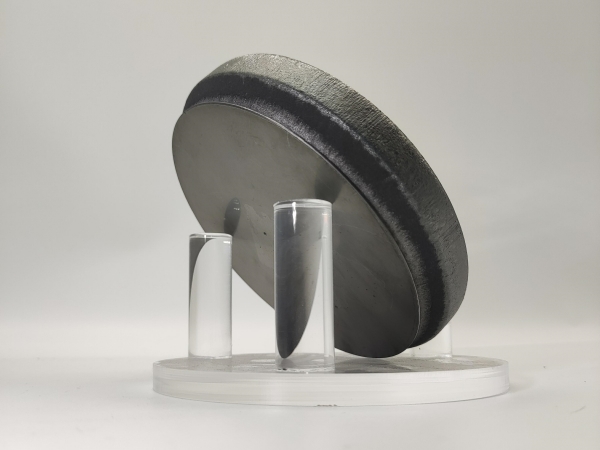
Thermal conductivity is a critical property of semiconductor substrate materials. It directly affects heat dissipation efficiency, device power density, and operational reliability. The thermal performance of a substrate is determined by factors such as crystal structure, lattice order, impurity concentration, and defect density.
This article examines five mainstream semiconductor substrates—silicon carbide (SiC), silicon (Si), sapphire (Al₂O₃), aluminum nitride (AlN), and gallium nitride (GaN)—analyzing their thermal conductivity characteristics, influencing factors, and future market prospects.

1. Thermal Conductivity Characteristics of Key Substrate Materials
Heat conduction in semiconductor substrates is primarily driven by
phonon transport (lattice vibrations). In compound semiconductors and ceramic substrates, thermal conductivity is strongly affected by
lattice ordering, grain boundaries, defects, and impurity levels. In general,
single-crystal materials exhibit higher thermal conductivity than polycrystalline forms due to reduced phonon scattering.
| Material |
Thermal Conductivity
(W/m·K, 25°C) |
Key Characteristics |
Main Influencing Factors |
Theoretical Limit
(W/m·K) |
| Silicon Carbide (SiC) |
120–490 |
Strong covalent bonding and long phonon mean free path |
Crystal polytype, doping level, dislocation density |
~490 (4H-SiC) |
| Silicon (Si) |
140–156 |
Efficient phonon transport in single crystals |
Crystal orientation, doping type, temperature |
~156 |
| Sapphire (Al₂O₃) |
25–40 |
Ordered crystal lattice but higher phonon scattering due to ionic bonding |
Crystal defects, impurity content |
~40 |
| Aluminum Nitride (AlN) |
170–230 |
Hexagonal structure with long phonon path; excellent ceramic thermal conductor |
Oxygen impurity content, density, grain size |
~320 |
| Gallium Nitride (GaN) |
130–200 |
Covalent bonding with high thermal conductivity in single crystals |
Dislocations, epitaxial layer thickness, lattice mismatch |
~200 |
Values above are measured at
room temperature using laser flash analysis, and may vary depending on material quality and manufacturing processes.
2. Market Applications of Major Substrate Materials
Silicon Carbide (SiC): High-Thermal-Conductivity Substrate for Power Electronics
SiC substrates offer
exceptionally high thermal conductivity and wide bandgap properties, making them ideal for
high-voltage, high-temperature, and high-power applications.
Key applications include:
Electric vehicles (EVs) – SiC power modules used in inverters, onboard chargers, and motor controllers reduce junction temperatures and improve energy efficiency.
5G/6G RF communication – Semi-insulating SiC substrates support GaN-on-SiC devices for high-power RF amplifiers.
Photovoltaic inverters and industrial power systems – SiC devices enable conversion efficiencies exceeding 99%.
The global SiC power device market is expected to grow rapidly, driven largely by EV adoption and renewable energy systems.
Silicon (Si): The Dominant Substrate for Mass Semiconductor Production
Silicon substrates have moderate thermal conductivity but offer
low cost, mature manufacturing processes, and compatibility with large wafer sizes (up to 12 inches). As a result, silicon accounts for
over 90% of the global semiconductor substrate market.
Key applications include:
Consumer electronics and integrated circuits such as CPUs, memory chips, and MCUs
Power electronics, including GaN-on-Si solutions used in fast chargers and medium-power devices
Photovoltaic cells and sensorsSilicon will continue to dominate the mainstream semiconductor market due to its
cost advantages and well-established manufacturing ecosystem.
Sapphire (Al₂O₃): A Specialized Substrate for Optoelectronics
Although sapphire has relatively
low thermal conductivity, it offers
high hardness, excellent optical transparency, and strong chemical stability.
Typical applications include:
LED manufacturing – Sapphire remains the dominant substrate for GaN-based LED chips.
Optical components – Smartphone covers, laser windows, and aerospace optical systems.
Low-power RF and sensing devices.
Market growth for sapphire substrates is slowing as higher thermal conductivity materials gain traction in power electronics.
Aluminum Nitride (AlN): High-Thermal-Conductivity Ceramic Substrate
AlN substrates combine
high thermal conductivity, electrical insulation, and good thermal expansion compatibility with GaN, making them ideal for
high-power electronic packaging.
Major applications include:
High-brightness LEDs and laser devices using AlN-based ceramic substrates
Power module packaging for rail transport, industrial power systems, and EV power electronics
Aerospace and defense electronics requiring high reliability in extreme environments
As manufacturing technologies improve, AlN is expected to gain a larger share of the
high-performance packaging materials market.
Gallium Nitride (GaN): High-Performance Substrate for Advanced Applications
GaN substrates provide
excellent thermal conductivity and perfect lattice matching with GaN epitaxial layers, enabling superior device performance. However, their
high manufacturing cost and technical complexity currently limit large-scale adoption.
Key applications include:
High-end lasers and ultraviolet detectorsMillimeter-wave and terahertz communication devicesQuantum sensors and advanced RF systemsSpecialized power electronics in aerospace and defenseAs GaN substrate production technologies mature, they are expected to play an increasing role in
next-generation optoelectronic and quantum devices.
3. Market Landscape and Industry Trends
The global semiconductor substrate market currently shows a
two-tier structure:
Silicon substrates dominate the mainstream market due to their low cost and mature manufacturing infrastructure.
Compound semiconductor substrates such as SiC, GaN, and AlN serve high-performance applications and are produced by a smaller group of specialized manufacturers.
Several key industry trends are emerging:
Larger wafer sizes (e.g., 8-inch SiC, larger silicon wafers) to improve manufacturing efficiency
Lower defect densities to enhance device performance
Cost reduction through improved crystal growth and processing technologies
Growing demand driven by electric vehicles, 5G/6G communications, AI computing, and renewable energy systems
In parallel, many countries are investing heavily in
domestic semiconductor material supply chains to strengthen technological independence.
Conclusion
Thermal conductivity plays a decisive role in determining the application landscape of semiconductor substrates.
High-thermal-conductivity materials such as SiC, AlN, and GaN are essential for
high-power electronics, RF communication, and advanced optoelectronic systems, and will drive future market growth.
Silicon substrates will remain the backbone of the semiconductor industry due to their cost efficiency and mature manufacturing infrastructure.
Sapphire substrates will continue to serve specialized applications in optoelectronics but face limited growth in high-power electronics.
As semiconductor technologies evolve, the demand for
high-performance compound semiconductor substrates will continue to increase, particularly in fields such as
electric vehicles, next-generation communications, and high-performance computing. At the same time, improvements in manufacturing technology and supply chain localization will reshape the global semiconductor materials market.